
The Story of Pokémon · Chapter X
This is the real-world story of how Pokémon was made and how it grew. Every line says where it comes from: a dated record, something a creator said in an interview, or something the press reported. Where the story is told more than one way, the caption says so.
Dates are Japanese release dates unless the line says otherwise, and they match the Pokémon Timeline. People appear only as silhouettes, hands and the things they used; everything on screen is built in 3D for this film.
XKanto to LumioseThe Switch era
Open Worlds
2018–2025
Let's Go's return to Kanto, Galar's stadiums, Hisui's distant past, Paldea's open world, Ash's championship and farewell, and a whole adventure inside Lumiose City.
Let's Go brought players back to Kanto, with Pikachu and Eevee walking beside them.
November 16, 2018The Pokémon Company · Corporate history (2026)
Sword and Shield brought a new generation to the Switch, with stadiums full of cheering crowds.
November 15, 2019The Pokémon Company · Corporate history (2026)
On its 25th anniversary, the franchise looked back in time, to Sinnoh's distant past.
February 27, 2021Wikipedia · Pokémon Legends: Arceus, revealed at the 25th-anniversary Pokémon Presents (2026)
Legends: Arceus returned to an ancient, wild land, before the first Pokédex was written.
January 28, 2022The Pokémon Company · Corporate history (2026)
Scarlet and Violet opened the whole map: go anywhere, in any order.
November 18, 2022The Pokémon Company · Corporate history (2026)
After 25 years, Ash and Pikachu finally became World Champions.
November 11, 2022Wikipedia (Japanese) · ポケットモンスター (2019年のアニメ) (2026)
Then they said goodbye. Three weeks later, a new journey began with new heroes.
March 24, 2023April 14, 2023Wikipedia (Japanese) · ポケットモンスター (2019年のアニメ) (2026)
And in 2025, Legends: Z-A turned an entire city, Lumiose, into the adventure.
October 16, 2025The Pokémon Company · Corporate history (2026)
 Pikachu
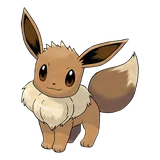 Eevee
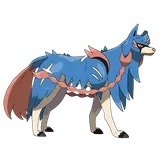 Zacian
 Zamazenta
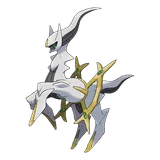 Arceus
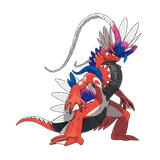 Koraidon
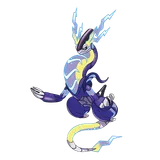 Miraidon
The rest of the story
- I · The 1970sThe CollectorSatoshi Tajiri grew up in Machida, on the western edge of Tokyo, among rice paddies, rivers and woods. He caught more insects than anyone, until the city grew over the fields.
- II · 1981–1989Game FreakAs a teenager Tajiri found the arcade, then wrote a handmade magazine about games called Game Freak. Ken Sugimori drew for it, and in 1989 it became a game studio with the same name.
- III · 1989–1990The CableThe Game Boy came with a cable to link two together. Tajiri imagined living creatures moving back and forth along it: catch them, collect them, trade them.
- IV · 1990–1996Six YearsMaking Pocket Monsters took nearly six years and nearly broke Game Freak. Junichi Masuda wrote the music, Atsuko Nishida designed Pikachu, Ken Sugimori led the art for all 151, and at the very end Shigeki Morimoto slipped in Mew.
- V · February 27, 1996Red and GreenPocket Monsters Red and Green came out in Japan on February 27, 1996, late in the Game Boy's life. A magazine contest for Mew and word of mouth did the rest.
- VI · 1996–1999PokémaniaThe card game, the anime, The Pokémon Company, the first Pokémon Center and the first film, and then North America and Europe: within three years Pokémon was everywhere.
- VII · 1999–2010A Growing WorldGold and Silver's clock, Ruby and Sapphire's colour, Diamond and Pearl's online trading, the first World Championships, and Black and White's all-new region.
- VIII · 2013–2016TogetherX and Y launched worldwide on the same day, fully in 3D. Pikachu paraded through Yokohama, the originals came back for the 20th birthday, and Sun and Moon set out for islands inspired by Hawaii.
- IX · July 2016OutsideAn April Fools' joke on Google Maps grew into Pokémon GO. In July 2016 it turned the real world into the map, and people everywhere went outside to look.
- XI · February 27, 2026Thirty YearsThirty years to the day after Red and Green, the next generation was announced. It started with two Game Boys and a cable; now there are more than a thousand Pokémon.